In September 2026, Servcorp brought around 180 business, investment, and policy leaders to Bab Samhan in Diriyah for Servcorp's inaugural Economic Forum. Powered by EMIR (Emerging Markets Intelligence & Research), with the Saudi Investment Promotion Authority (SIPA) as a strategic partner, the forum examined the shifts that will shape Saudi Arabia and the wider region over the next five years.
If you're an Australian business weighing up Saudi Arabia, you've probably noticed the headlines are everywhere. Cutting through them was the whole point of the forum. "Getting information is actually much easier, but there is much more noise," said David Godchaux, Servcorp's CEO for the Middle East, Europe and America. "The goal is to try and find the signal in the middle of the noise." Here are five signals that stood out, and what they mean for Australian businesses.
Six shifts since 2009
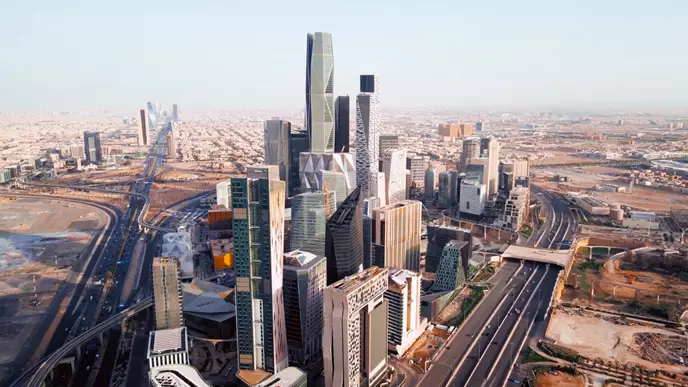
Vision 2030, launched in 2016, set out to diversify Saudi Arabia’s economy and grow the private sector. The results show across six areas, which also became the forum’s six themes:
- Economy: non-oil activity made up 55% of the economy in 2025.
- Investment: nearly 600 international companies have set up regional bases since 2021.
- AI: 2026 has been declared the Year of AI.
- Energy: 19.3 GW of solar and wind was installed by August 2026.
- Logistics: 34 logistics centres now operate at Saudi ports.
- Workforce: women’s participation has doubled to around 34% since 2017, with unemployment at 6.4%.
Sources: GASTAT Labour Force Survey (Q1 2026), Ministry of Investment, KAPSARC Renewables Tracker (Aug 2026), Mawani.
For foreign companies, the key incentive is the Regional Headquarters (RHQ) Programme. Multinationals that meet its conditions and run their regional operations from Saudi Arabia can receive 0% corporate income and withholding tax for 30 years on qualifying activities.
Five takeaways from the forum
1. Growth will be harder won, but opportunity remains
Speakers were candid about the global outlook. As one economist put it, "Things are going to be tougher, but that doesn't mean there aren't opportunities." With government debt costs rising, growth will lean more on private investment, and Saudi Arabia's energy, location and trade routes put it in a strong position.
2. Secure trade is replacing free trade
"It's no longer simply about free trade; it's about secure trade," one speaker said, describing a shift towards "globalisation minus one", where supply chains are redrawn around trusted partners. The catch is cost: resilience is more expensive, and every business must decide how much reliability is worth.
3. AI is being built at national scale
Saudi Arabia is investing heavily in AI, with 2026 declared the Year of AI. Yet speakers agreed the hardest challenge is culture, not technology. Employees are often adopting AI faster than company programmes, and real value comes from preparing data and choosing clear use cases.
4. Capital follows presence
The investor panel's message was clear: publicly available information isn't enough, and direct engagement with government and business is essential. "You've got to be present," said one panellist. With international capital in growing demand, investor conversations now focus on how investments are structured.
5. The rise of the smaller core
Godchaux argued that AI lets companies run a smaller permanent core, drawing on technology, freelancers and specialists. The opportunity is to redesign how a business operates rather than automate old ways of working, and to treat local cultural understanding as a business capability.
How Servcorp can help Australian businesses in Saudi Arabia
So what does all this mean in practice? Saudi Arabia rewards businesses that turn up in person, but most don’t want to sign a long lease before they’ve tested the market. That’s exactly the gap Servcorp fills.
1. Establish a presence from day one
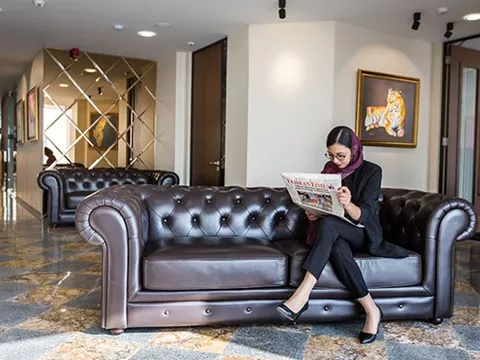
A Servcorp virtual office gives Australian businesses a professional address in Riyadh, Jeddah, Al Khobar or Madinah, along with a local phone number and a receptionist who answers your calls. For eligible businesses, Servcorp's Saudi team can also support company setup, so you can move from first conversations to a formal entity with one provider.
2. Build around a smaller core
Servcorp's workspace grows and shrinks with your team. Start with coworking or a few desks, add or reduce them without penalty, and move into a larger private office in the same building as you hire. Meeting rooms can be booked when you need them for client meetings and workshops.
3. Keep fixed costs and risk low
Entering a new market carries enough uncertainty without a long lease and a fit-out bill. With Servcorp, there is no capital outlay for furniture or fit-out, and one monthly fee covers reception, IT support and cleaning. Offices come fully equipped with high-speed internet and secure infrastructure, so a new team can start work on its first day.
4. One network, two countries
Servcorp members can use more than 150 offices in 19 countries, including across Australia. Teams travelling between Sydney, Melbourne and Riyadh can work from a Servcorp office at both ends.
Servcorp in Saudi Arabia
Since opening in Jeddah in 2009, Servcorp has grown to 14 locations and more than 20 floors across four cities, including nine in Riyadh.
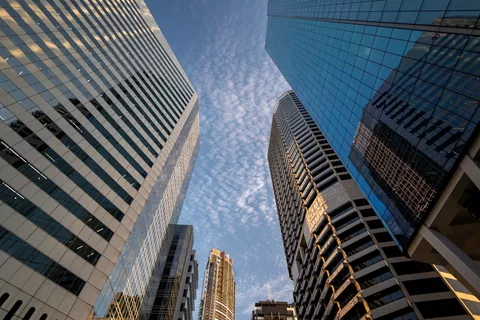
Whatever your sector, there’s likely a Servcorp address to suit. Financial and professional services firms may feel at home on King Fahd Road at Al Faisaliah Centre, Servcorp’s longest-running location in the Kingdom. Companies drawn to Riyadh’s newer business districts might prefer the newly opened STC Square, in the heart of the city.